

How Do I Report Street Light Out?
A broken Street Light is easy to notice, but not always easy to solve quickly. For municipal teams, property managers, road contractors, campus facility departments, and outdoor lighting maintenance companies, one dark lamp can become a larger service issue if the report is unclear. The repair team may arrive at the wrong pole, bring the wrong parts, or miss the real cause of the outage.
Reporting a street light out should not only say, “the light is broken.” A useful report should help the maintenance team identify the location, lamp type, fault behavior, surrounding risk, and urgency. The faster these details are collected, the faster the light can return to service.
Table of Contents
A Good Report Starts With The Exact Location
The first thing to record is the exact location. A street name alone is often not enough, especially in industrial parks, residential communities, campuses, parking lots, and long road sections. The report should include the nearest building, gate, intersection, parking zone, pole number, or GPS location if available.
It also helps to describe the surrounding scene. For example, the broken light may be near a pedestrian crossing, vehicle entrance, loading area, school path, public square, or factory driveway. These details help the repair team judge whether the issue affects safety, traffic, or nighttime operations.
For facility managers, a photo can reduce communication time. One clear image of the pole and one image showing the dark area at night can help the maintenance team confirm the problem before visiting the site.
Describe The Failure, Not Just The Darkness
Not every street light outage has the same cause. Some lights are completely off. Some flicker. Some turn on and off repeatedly. Some stay dim even when nearby lights work normally. Some only fail after rain or after several hours of operation.
These details matter because they point to different possible problems. A complete outage may involve power supply, wiring, driver failure, LED module failure, or control system issues. Flickering may suggest unstable power, poor connection, moisture, or aging components. A light that fails after rain may require inspection around sealing, cable entry, or installation protection.
A useful report can include:
Light completely off
Flickering or flashing
Dim output
Turns off after working for a short time
Fails only after rain
Damaged pole or fixture
Broken cover or visible impact marks
This makes the repair process more direct and helps reduce unnecessary repeated site visits.
Frequent Outage Reports Reveal A Bigger Procurement Problem
For B2B buyers, reporting a broken light is only the first step. If the same road section, parking lot, or public area keeps producing outage reports, the issue may not be isolated maintenance. It may be related to fixture quality, heat dissipation, waterproof protection, power matching, or unsuitable lamp selection for the outdoor environment.
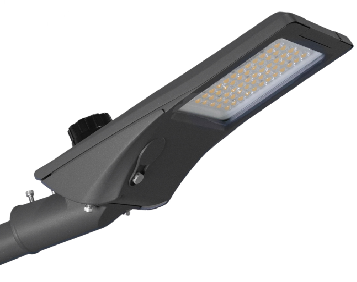
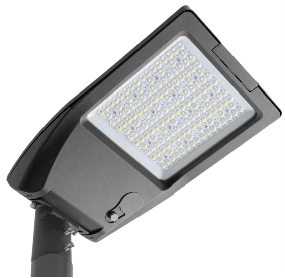
This is where street light specification matters. We are DONGJIN, and our Modern LED Street Light is designed for outdoor road and public area lighting, with power options from 40W to 200W, high lighting efficiency, a die-cast aluminum body, and IP66 waterproof protection. These details are important for project buyers because street lights need to handle weather, long working hours, and repeated outdoor use.
For municipal projects, industrial parks, public roads, and parking areas, a reliable fixture can reduce the number of outage reports that maintenance teams need to process later.
Maintenance Teams Need Standard Reporting Rules
A street light reporting system works best when everyone uses the same information format. Property staff, security teams, road inspectors, and maintenance workers should not report issues in different ways. A simple standard can make repair tracking much easier.
A practical report should include the location, pole number if available, fault type, date found, photo, nearby risk, and whether the issue affects pedestrian or vehicle safety. For larger projects, each report can also include lamp model, installation date, warranty status, and previous repair record.
This helps facility managers see patterns. If one batch of lights has more failures, the team can review installation conditions or supplier quality. If one area has repeated problems after rain, the team can inspect waterproofing and wiring protection. If lamps are too dim for the road width, the issue may come from lighting design rather than lamp failure.
Better Street Lights Reduce The Need For Emergency Repairs
Street lighting maintenance is not only about fixing lamps after they fail. Good project planning can reduce future repair pressure. Buyers should choose fixtures based on road type, mounting height, required brightness, color temperature, waterproof level, impact resistance, heat dissipation, and maintenance access.
Our Modern LED Street Light supports color temperatures from 3000K to 6000K, with a power factor of at least 0.95, IP66 waterproof rating, and IK08 impact protection. For contractors and outdoor lighting distributors, these specifications help match the lamp to streets, parking lots, public spaces, and other outdoor lighting scenes where stable nighttime performance matters.
When buyers choose fixtures only by low price, maintenance teams may pay the cost later through more reports, more replacements, and more emergency site visits.
Conclusion
To report a street light out, collect clear information first: location, pole number, fault behavior, photo, surrounding safety risk, and time of discovery. A better report helps the maintenance team find the right lamp, understand the likely problem, and reduce wasted site visits.
For project buyers, repeated outage reports should also trigger a bigger question: are the installed street lights suitable for the real outdoor environment? If failures happen too often, it may be time to review fixture quality, waterproof protection, heat dissipation, power matching, and installation conditions.
If your road, parking lot, public area, or industrial park lighting project needs more stable LED street lights, we can review the site scene with you before selection. Share the road width, pole height, power range, target brightness, and outdoor conditions, and we can help match a street light direction that reduces future maintenance pressure instead of only reacting after lights go out.
Previous: Do Garden Lights Deter Rats